
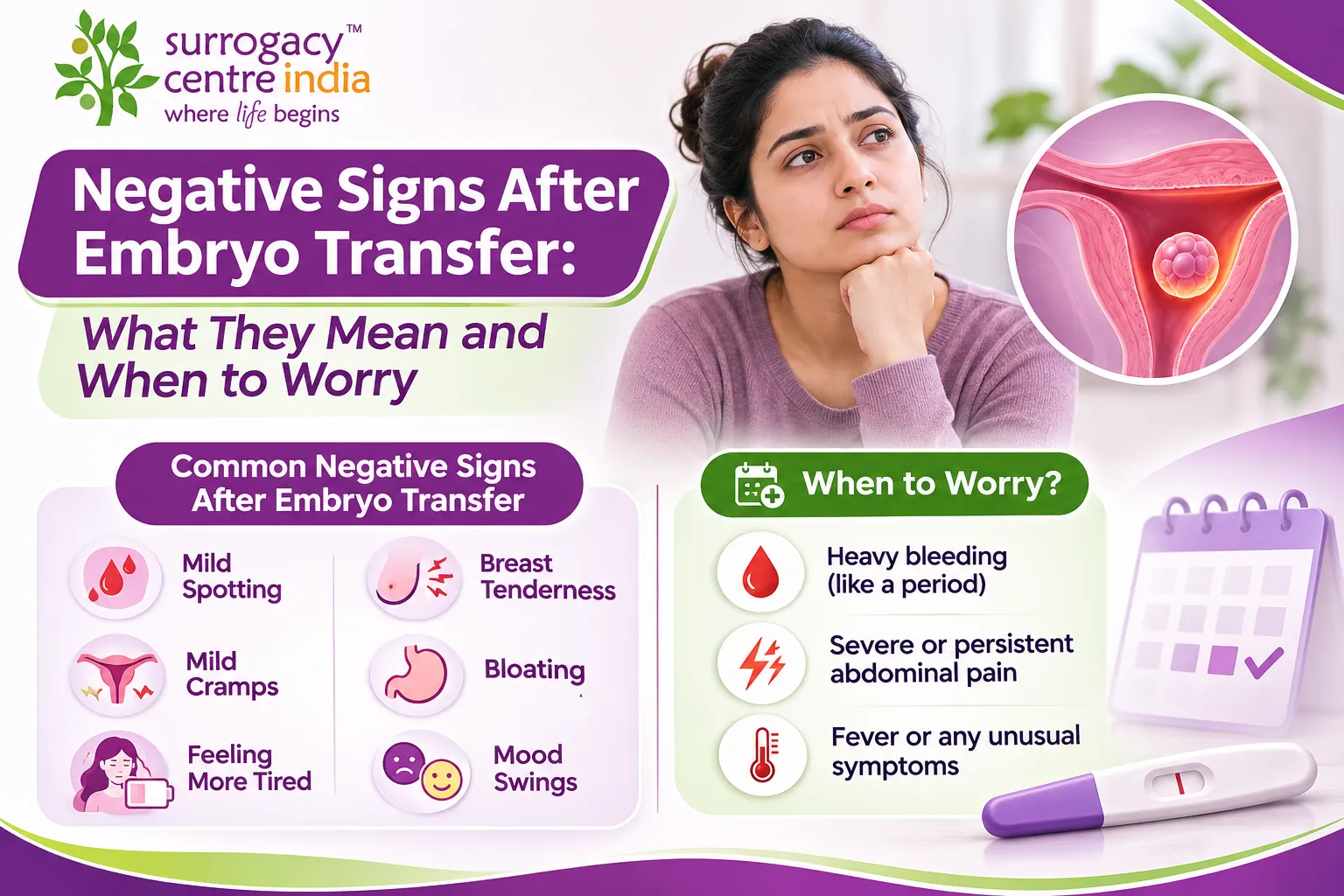
A definitive negative sign after an embryo transfer is a negative beta hCG blood test performed 10 to 14 days post-transfer.
Negative Signs after Embryo Transfer
There are different changes that women can experience during the two week wait that can cause anxiety. Some of the most common include:
Heavier Bleeding
Embryo transfer can cause spotting, but if bleeding becomes heavy, or if it lasts and is accompanied by other symptoms, it can indicate that the embryo has not implanted and the body is returning to a menstruating state.
Persistent Abdominal Cramps
Cramps after embryo transfer can be due to the hormonal changes and the procedures involved. If pain is persistent and/or severe, it indicates that something else is wrong.
No Pregnancy Symptom
Many women do not experience any symptoms during the initial stages of pregnancy.
Negative Pregnancy Test
Taking a home pregnancy test too early can lead to an inaccurate result. The result can also be negative if the level of human chorionic gonadotropin (hCG) in the body is still too low to be detected.
Sudden Changes in Breast Tenderness
Breast tenderness is also affected by the changing levels of hormones and fertility medications. A decrease in breast tenderness doesn’t mean the embryo has failed to implant.
What Causes Embryo Implantation Failure?
Embryo implantation failure can be caused by a variety of different factors including:
Embryo Quality: Embryos can contain abnormal numbers of chromosomes or have other developmental issues that impact implantation.
Uterine Lining: If the lining of the uterus is not prepared properly it can also affect implantation.
Hormone Levels: Insufficient levels of reproductive hormones can impact implantation.
Age and Reproductive Health: Age and pre-existing fertility conditions can impact embryo quality and IVF outcomes.
Other Medical Conditions: Other pre-existing health and reproductive conditions can also impact IVF outcomes.
Remember, unsuccessful embryo implantation is not always the result of something the woman did or didn't do.
Do Negative Signs Always Mean IVF Failure?
No, negative signs after embryo transfer do not always mean IVF treatment has failed. Each woman's body responds to fertility treatment and hormone changes in a unique manner.
During successful pregnancies, a woman may experience mild signs and symptoms, including spotting, cramping, breast tenderness, and bloating. Some women experience no symptoms at all at this stage.
Similarly, progesterone and other fertility medications may cause symptoms that are indistinguishable from early pregnancy. Therefore, it is impossible to predict the outcome based on the presence or absence of symptoms.
The only way to confirm a pregnancy after an embryo transfer is to have a blood test done to measure the level of beta-human chorionic gonadotropin (β-hCG) (a hormone released by the embryo after implantation).
When should you worry and contact your fertility doctor
Common symptoms after embryo transfer may include light spotting, cramps, and nausea. These symptoms do not warrant a call to your doctor. You must contact your doctor if you have:
Severe pain in your abdomen or pelvis.
Heavy or prolonged vaginal bleeding.
Persistent fever.
Dizziness for a long time.
Swelling in your abdomen with nausea and vomiting.
Stress or anxiety may cause some abnormal symptoms that will resolve with time. If the symptoms are physically and mentally damaging, then contact your doctor and/or seek emotional support.
Conclusion
Negative signs after embryo transfer increase anxiety; however, negative signs do not always indicate unsuccessful implantation or IVF failure. Several symptoms like spotting or cramps may be caused by other reasons and do not indicate IVF treatment outcome. Each woman’s experience during the 2-week wait is different and only beta hCG blood test confirms pregnancy. Unusual symptoms should be reported to the doctor as advised. If you have questions about the embryo transfer process, including what to expect and how to prepare for your IVF journey, the fertility specialists at Surrogacy Centre in India can assist you.
Frequently Asked Questions
What are the most common negative signs after embryo transfer?
Some women experience persistent abdominal pain and/or heavy bleeding after an embryo transfer. But having these symptoms does not mean the embryo did not implant.
Does having no symptoms after embryo transfer mean failure?
Some women have no noticeable symptoms after embryo transfer and are still successful in achieving pregnancy.
Can bleeding after embryo transfer mean unsuccessful implantation?
Although bleeding can occur after embryo transfer, heavy and/or prolonged bleeding is more likely to be related to your menstrual period or other reasons.
When can a pregnancy test confirm IVF success?
Beta hCG blood tests are usually performed around 10 to 14 days after embryo transfer. Discuss with your fertility specialist to determine the right time for you to take the blood test.
Should I stop progesterone if I notice negative signs?
No. Continue progesterone until your fertility specialist says to stop the medication.